Psychometrics in dating: measuring compatibility scientifically
What psychometrics is, why Big Five beats MBTI, and how AvatarMatch turns valid tests into a live compatibility check.
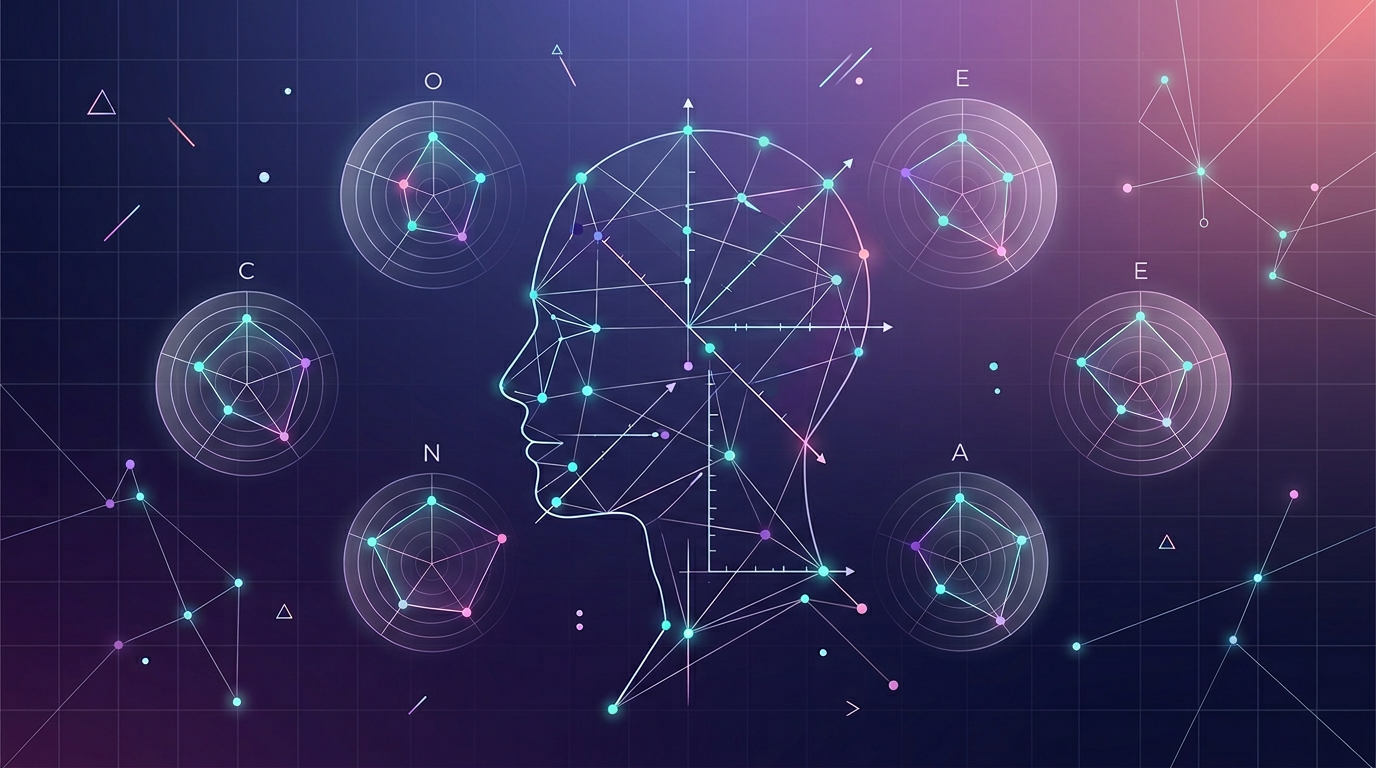
When an app promises a “99% match,” it’s fair to ask: what did it actually measure? Psychometrics is the discipline that answers that. It turns vague notions like “values” and “character” into quantities you can verify, compare, and discuss.
What psychometrics is
Psychometrics is the branch of psychology concerned with measuring psychological traits: personality, cognition, attitudes, emotions. Its core questions:
- Reliability — does the test give stable results on retest?
- Validity — does it really measure what it claims?
- Norms — who is a given person being compared to?
Break any of the three and you don’t have psychometrics — you have a horoscope with charts.
Big Five: the gold standard
The modern consensus in personality research is the Five-Factor model (OCEAN):
- O — Openness to experience
- C — Conscientiousness and self-control
- E — Extraversion
- A — Agreeableness and cooperativeness
- N — Neuroticism (emotional instability)
Unlike MBTI, Big Five:
- is backed by decades of cross-cultural research;
- uses continuous scales, not dichotomies;
- shows strong test-retest reliability;
- predicts behavior in relationships, work, and health.
What actually predicts compatibility
Studies of couples (Roberts, Lucas, Finkel, and others) give a fairly consistent picture:
- Low neuroticism in both partners — the strongest predictor of relationship satisfaction.
- High conscientiousness — linked to stability and trust.
- Value similarity — matters more than shared interests.
- Big Five similarity — a small but steady effect.
- Attachment style (secure / anxious / avoidant) — explains many conflicts invisible to standard tests.
What tests don’t predict on their own: chemistry, communication dynamics, and how two people handle stress together.
Where psychometrics has limits
Honesty beats marketing. The real limits:
- Self-report is biased. People describe an idealized self, especially while dating.
- One snapshot isn’t personality. Mood, fatigue, and context shape answers.
- Correlations ≠ predictions for a specific couple. Statistics work on groups; you need one person.
- Any test simplifies. Even Big Five can’t fully capture humor, aesthetics, and nuanced values.
Serious matching can’t end with a questionnaire.
How AvatarMatch uses psychometrics
AvatarMatch treats the test as a start of the conversation, not a verdict.
| Stage | What AvatarMatch does |
|---|---|
| Profile | Validated Big Five scales plus values and expectations |
| Communication style | Your avatar is modeled on real dialogue |
| Scenarios | Reaction tests for conflict, stress, everyday decisions |
| Compatibility | Two avatars talking — a live simulation of fit |
| Feedback | Metrics and an explainable breakdown of why it worked or didn’t |
The result is not a “99% match from thin air” but a verifiable picture: where you align, where you diverge, and what to do about it.
How to read compatibility tests wisely
- Ask: “What model is this based on?” No answer — no psychometrics.
- Look past the pretty percentage and read the breakdown: which scales, which gaps.
- Don’t filter people by a single score — look for patterns and dynamics.
- Pay attention to neuroticism, conscientiousness, and attachment — more informative than “types.”
Takeaway
Psychometrics is neither magic nor a label. It’s a tool that sharpens the conversation about compatibility. AvatarMatch takes the best of the scientific approach — Big Five, attachment theory, values profiling — and adds what tests have always missed: live interaction.
Comments
No comments yet — be the first.